In 2024, the global conversational AI Market size was valued at 19.21 billion, and the market is further expected to reach 132.86 billion by 2034. The global conversational AI market, which includes chatbots, virtual assistants, and other AI-driven solutions, is expected to see a compound annual growth rate (CAGR) of nearly 24% from 2024 to 2034.
Factors such as advancements in natural language processing (NLP), the rise of voice-enabled applications, and widespread adoption across sectors like retail, healthcare, BFSI, and telecom. In this guide, we are going to take an in-depth look at the Global Conversational AI Market Size, Key drivers, Insights, Benefits, and more.
Global Conversational AI Market Size (2023 to 2034)

The conversational AI market is growing at an impressive pace. In 2023, the market was valued at USD $12.5 billion, and just a year later, it jumped to $15.5 billion. This upward trend isn’t slowing down anytime soon experts predict the market will reach nearly $133 billion by 2034.
That’s a huge leap in just a decade, with an average annual growth rate of about 24%. Each year brings a noticeable increase: by 2025, the market is expected to grow to $19.2 billion, then to $29.5 billion by 2027, and more than double that by 2030, reaching $56.2 billion.
The growth continues strongly into the 2030s, with the market likely surpassing $107 billion in 2033. This steady rise shows just how quickly conversational AI is becoming a vital part of technology in everyday life and business.
| Year | Market Size (USD Billion) |
| 2023 | 12.50 |
| 2024 | 15.50 |
| 2025 | 19.21 |
| 2026 | 23.82 |
| 2027 | 29.52 |
| 2028 | 36.60 |
| 2029 | 45.37 |
| 2030 | 56.25 |
| 2031 | 69.73 |
| 2032 | 86.45 |
| 2033 | 107.17 |
| 2034 | 132.86 |
U.S. Conversational AI Market Size (2023 to 2034)

The U.S. conversational AI market is experiencing rapid and consistent growth. Valued at $2.63 billion in 2023, it rose to $3.26 billion in 2024 and is projected to reach approximately $28.57 billion by 2034. This reflects a strong compound annual growth rate (CAGR) of 24.24% over the forecast period. Year after year, the market shows steady expansion growing to $4.03 billion in 2025, $6.20 billion by 2027, and surpassing $11.81 billion by 2030. By 2032, the market is expected to climb to $18.15 billion and continue rising to $22.51 billion in 2033. These figures highlight the increasing adoption of conversational AI solutions across various sectors in the U.S., driven by advancements in natural language processing, machine learning, and rising demand for automated customer interaction.
| Year | Market Size |
| 2023 | 2.63 |
| 2024 | 3.26 |
| 2025 | 4.03 |
| 2026 | 5.00 |
| 2027 | 6.20 |
| 2028 | 7.69 |
| 2029 | 9.53 |
| 2030 | 11.81 |
| 2031 | 14.64 |
| 2032 | 18.15 |
| 2033 | 22.51 |
| 2034 | 28.57 |
Conversational AI Market Share By Region
North America holds the largest share of the global conversational AI market, accounting for 30% of the total. Europe follows closely with a 27% share, reflecting strong adoption across industries such as finance, healthcare, and retail. The Asia Pacific region contributes 25%, driven by rapid digital transformation and growing investment in AI technologies across countries like China, India, and Japan. Latin America holds an 11% share, while the Middle East and Africa (MEA) represent 7% of the market. These figures indicate a broad global uptake of conversational AI, with North America and Europe leading, but notable growth potential emerging in Asia Pacific and developing regions.
| Region | Market Share |
| North America | 30% |
| Europe | 27% |
| Asia Pacific | 25% |
| Latin America | 11% |
| MEA | 7% |
Conversational AI Market Key Drivers
The global shift toward automation in customer service is a primary driver of the conversational AI market. Traditional support channels such as call centers, emails, and app-based messaging are increasingly being supplemented or replaced by AI-powered solutions. According to industry analysis, over 65% of customer service interactions are now expected to be handled without human intervention, largely due to the deployment of conversational AI technologies.
Businesses are leveraging AI-driven chatbots and virtual assistants to deliver real-time, personalized customer interactions through Natural Language Processing (NLP). These AI tools not only reduce operational costs but also enhance customer engagement by offering 24/7 support and actionable insights based on user behavior and purchase patterns.
Market Opportunity: Proliferation of Large Language Models
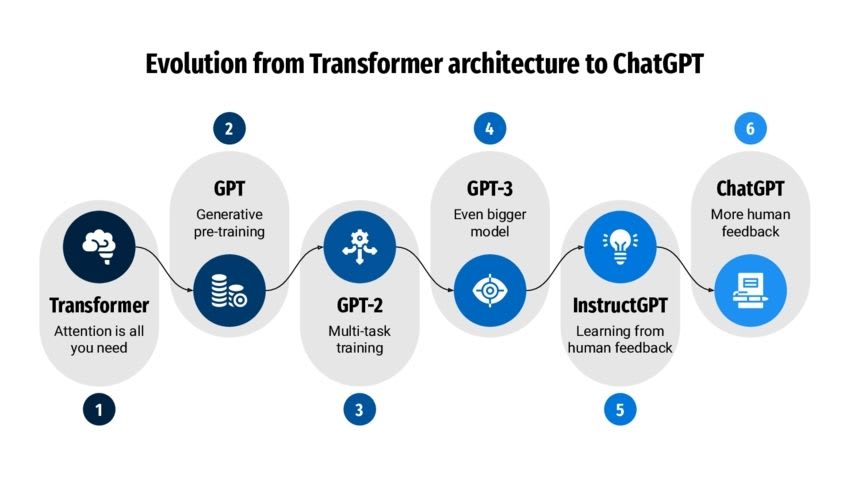
The rapid advancement and mainstream adoption of large language models (LLMs), such as GPT-style architectures, represent a major opportunity for the conversational AI market. These models excel in understanding and generating human-like text across a variety of applications, including question answering, summarization, and translation.
LLMs enhance conversational AI systems by enabling more natural, fluid, and context-aware interactions. They also reduce the manual effort required by AI trainers, offering pre-trained intents and diverse language material to improve system performance and adaptability.
As LLM integration improves language comprehension and response accuracy, conversational AI platforms become more scalable, efficient, and aligned with enterprise communication goals thereby boosting their attractiveness across sectors such as customer service, healthcare, education, and finance.
Conversational AI Type Insights
The market is segmented into Chatbots and Intelligent Virtual Assistants (IVAs), with chatbots expected to lead during the forecast period. These AI tools simulate human-like conversations, mainly via text and increasingly through voice. Chatbots can be rule-based or AI-driven, and are widely used in customer support, lead generation, e-commerce, and troubleshooting.
They are commonly integrated into websites, apps, and messaging platforms. According to reports, 84% of businesses see chatbots as crucial for customer engagement, reinforcing their dominance in the market.
Conversational AI Deployment Insights
By deployment, the market is split into on-premises and cloud-based solutions. The on-premises segment is expected to hold the largest share. Organizations prefer this model for greater control over data, enhanced security, and customization especially in industries handling sensitive information like finance, logistics, and HR.
On-premise setups enable real-time monitoring, allow businesses to optimize performance, and avoid reliance on third-party hosting. This level of control and compliance is a key factor driving the segment’s growth.
Conversational AI Across Industries
Retail & Ecommerce
- 66% of U.S. consumers are interested in using GenAI-powered conversational commerce, potentially doubling adoption.
- 44% of consumers value chatbots for finding product information pre-purchase.
- The retail sector accounts for 21% of the global conversational AI market.
- $72 billion in global retail spending on chatbots projected by 2028.
- Retail leads all sectors in chatbot adoption.
Financial Services (BFSI)
- BFSI holds a 23% market share in conversational AI usage (2024).
- Chatbots are widely used for lead generation, customer onboarding, payment queries, and automated support.
- 48% of U.S. banking leaders plan to integrate GenAI into chatbots and virtual assistants.
- By the end of 2024, 33.2% of U.S. adults expected to use AI-based banking chatbots.
Healthcare
- Chatbot adoption in healthcare is projected to grow by 33.72% (2024–2028).
- 81% of consumers interacted with a healthcare chatbot or voice assistant in the past year:
| Consumer Response | Share of respondents |
| Positive Experience | 41% |
| Neutral | 25% |
| Negative | 15% |
41% of respondents reported a positive experience when interacting with conversational AI tools such as chatbots or voice assistants, indicating a growing acceptance of AI-driven customer support. Meanwhile, 25% described their experience as neutral, suggesting room for improvement in areas like personalization, response accuracy, or user interface. Notably, 15% of users had a negative experience, highlighting ongoing challenges in chatbot performance, relevance, or emotional intelligence.
- Symptom checkers lead healthcare chatbot use, with 37%+ market share.
- Cloud-based healthcare chatbots forecast to grow 63.4%, while on-premises options remain vital for data-sensitive deployments.
Marketing & sales
Conversational AI in Marketing and Sales is transforming how businesses engage with customers, generate leads, and close deals. By leveraging chatbots, virtual assistants, and AI-driven tools, organizations can create personalized, interactive experiences that enhance customer satisfaction and drive revenue.
- 54% of surveyed customers would use a chatbot to inquire about a product.
- 34% of consumers have utilized a chatbot for product discovery or purchases.
| Reasons for wanting to try GenAI conversational commerce | Share of respondents |
| Convenience | 55% |
| Ability to provide sufficient information | 51% |
| Can provide personalized advice / recommendation | 42% |
| Simplifies purchasing process | 39% |
| Able to get products quickly | 22% |
| Chatting feels like communicating with a real person | 20% |
| Flexible options for order placement, delivery & payment | 19% |
| Fun / immersive experience | 12% |
Human resources management
- 12% of GenAI’s total value potential in HR is attributed to its ability to access corporate knowledge bases and provide personalized training recommendations.
- 77% of companies use ChatGPT for writing job descriptions, 66% for composing interview requests, and 65% for responding to candidates during hiring operations.
- According to IBM, HR managers using the AI-powered IBM Watson Assistant reduced time spent on common HR workflows by 75%.
Types of conversational AI solutions
AI Chatbots
AI chatbots utilize machine learning (ML) and natural language processing (NLP), including natural language understanding (NLU) and natural language generation (NLG), to understand user input and generate relevant responses. Unlike traditional rule-based bots, AI-powered chatbots can better interpret user intent and provide more personalized answers.
- Market Insight: A third of American consumers reported using an AI chatbot in the last three months.
Virtual Assistants
Virtual assistants perform standard chatbot tasks like answering questions and more complex actions such as making transactions or controlling smart devices. Popular examples include Apple Siri and Amazon Alexa.
- Market Growth: The virtual assistant market is projected to grow by $64.5 billion between 2023 and 2028, with a CAGR of 51%.
- Consumer Sentiment: 67% of consumers approve of AI in customer experience, with many eager to delegate customer service tasks to personal AI assistants.
- By 2027, 87% of customer experience leaders are expected to design experiences where AI assistants are used throughout the customer journey.
Generative AI Agents
Generative AI chatbots like ChatGPT are designed to help users manage and analyze information, performing tasks such as database querying, content summarization, and report generation.
- Market Usage: As of August 2024, ChatGPT had over 200 million weekly active users, and 92% of Fortune 500 companies use OpenAI’s products.
Voice Assistants
Voice assistants leverage speech recognition and synthesis to understand and respond to spoken language, enabling hands-free interactions, especially on mobile devices.
- Consumer Engagement: 51% of consumers have interacted with advanced voice AI.
- User Growth: The number of voice assistant users in the United States is expected to reach 157.1 million by 2026.
- Usage Trends: 48.7% of U.S. internet users are expected to use voice assistants in 2024, with 89.2% accessing them via smartphones. Gen Z shows an even higher rate of 94.5%.
- Future Outlook: 90% of customer experience leaders believe voice AI will shape the future of voice-driven customer service.
Conversational AI for Key Business Functions
- 96% of shoppers believe more companies should adopt chatbots over traditional customer service methods.
- 35% of consumers show interest in using chatbots on retailer or brand websites.
- By 2025, 80% of customer service organizations will leverage generative AI for agent productivity and better CX, primarily through AI chatbots, content generation, and automation.
- By 2026, 10% of all customer interactions in contact centers will be fully automated via AI-powered chatbots or voicebots.
- 83% of contact center employees report that consumers now expect 24/7 resolution, driven by chatbot adoption and digital engagement.
- Generative AI chatbots can reduce human-handled service volumes by up to 50%, depending on current automation maturity.
- 81% of consumers now see AI as essential in modern customer service, a growth of 11 percentage points over the past year.
- A chatbot’s ability to progress a customer issue is the top predictor of reuse, explaining 18% of repeat usage likelihood.
Benefits of Conversational AI Adoption
The adoption of conversational AI is delivering measurable advantages across customer experience, operational efficiency, and cost optimization:
Enhanced Customer Experience
- More than 40% of consumers value chatbots for their ability to provide support outside standard customer service hours according to Userlike.
- A Zendesk study shows that 91% of customer experience (CX) leaders believe AI technologies, including conversational agents, can deliver highly personalized customer interactions.
- Gartner reports that 38% of customer service leaders identify improved customer experience and retention as the primary goal behind deploying large language model-based applications.
Consumer opinions on conversational AI for customer service 2024
| Consumer opinions | Share of respondents |
| More companies should use chabots instead of traditional customer support teams | 96% |
| Conversational AI will make traditional call centre obsolete | 94% |
| Would use a chatbot to see if it can help me out instead of waiting for a customer representative to take my call | 82% |
Improved Operational Efficiency
- Companies adopting autonomous service solutions are reporting significant efficiency gains.
- Zendesk notes that 90% of CX trendsetters have seen a positive return on investment (ROI) from implementing AI copilots in customer service teams.
- Research by BCG estimates that scaling generative AI chatbots could increase productivity by 30% to 50% or more, depending on the deployment context.
Significant Cost Reduction
- According to forecasts, by 2026, conversational AI is projected to reduce labor costs in contact centers by approximately $80 billion, largely by automating routine agent tasks and optimizing resource allocation.
Conversational AI adoption concerns & challenges
Despite the rapid adoption of conversational AI, several concerns continue to affect user confidence and acceptance. A leading issue is lack of trust and security, cited by 37% of respondents, highlighting ongoing worries about data privacy and the reliability of AI interactions. 35% expressed concern over the absence of a human touch, emphasizing that many users still value the personal feel of in-person service. Other challenges include limited flexibility or inadequate responses from AI systems, noted by 15% of users, along with concerns over restricted purchasing options (9%) and lack of simplicity or ease of use (4%). These findings suggest that while the technology offers significant benefits, overcoming these barriers will be crucial for broader consumer acceptance and long-term success.
| Concerns | Share of respondents |
| Lack of trust / security | 37% |
| Lack of in-person feel | 35% |
| Lack of information / solution / flexibility | 15% |
| Lack of alternative purchase methods | 9% |
| Lack of simplicity and ease of use | 4% |
Wrapping Up
The Conversational AI market is expected to witness significant growth, driven by the increasing demand for automation, personalized customer experiences, and efficiency across industries. With technologies like AI-powered chatbots, virtual assistants, and natural language processing (NLP) becoming integral to customer service, marketing, and sales operations, the market is expected to expand rapidly in the coming years. As businesses continue to prioritize cost reduction, customer engagement, and operational scalability, the market is projected to see a robust compound annual growth rate (CAGR). However, challenges related to data privacy, ethical considerations, and bias in AI models remain critical barriers to overcome. Despite these challenges, the adoption of Generative AI, large language models, and AI-driven automation presents ample opportunities for businesses to enhance their customer interaction strategies, positioning Conversational AI as a key driver of digital transformation across industries.